
How Arrest Warrants Work in Mahnomen County
An arrest warrant is a court order authorizing custody. In Minnesota it usually means a judicial officer has reviewed a complaint or affidavit and found probable cause. The signed order then goes to an officer for execution. Mahnomen County follows the same five-step path as the rest of the state. An alleged offense creates the legal basis. A prosecutor or investigator prepares an application. A judge issues the warrant or denies it. The court classifies the record for access. The sheriff or another authorized agency serves it. Not every arrest in Mahnomen County follows a warrant, though. Minn. Stat. §629.34 sets out when an officer may arrest without one. That warrantless power is separate from a judge's order. A county case number will not reach a tribal court file or a federal docket either, and neither one appears in a county warrant search.
Mahnomen County Arrest Warrant Facts and Limits
Two Mahnomen County offices answer two different questions. The court decides whether a warrant exists. The sheriff handles execution and the logistics of custody. Ask Court Administration whether an order is active, recalled, or quashed, and which category applies. Then ask the Mahnomen County Sheriff's Office about service, transport, and the current detention destination. Neither office can give legal advice. The sheriff cannot recall an order. The Sheriff's Office covers 16 townships and three cities, and it publishes a general phone line rather than a warrant counter. Call 218-935-2255 with logistics questions and 218-935-2251 with court questions.
Arrest Warrants: What They Contain
A Mahnomen County warrant record carries a small set of identifiers, conditions, and rules. Reading the right fields saves time on the phone.
| Issuing court | Mahnomen County District Court, Ninth Judicial District, with the issuing judicial officer. |
|---|---|
| File or case number | The county code, case type, year, and sequence, as in 44-CR-25-042. |
| Warrant type and date | The category and the date the judge signed the order. |
| Offense and level | The charge category and classification, without the person's charge narrative. |
| Bail or release terms | Any bond figure, release conditions, or a no-bail designation. |
| Status | Issued, served or executed, recalled, or another court status with a date. |
| Executing agency | The sheriff or authorized agency that received the order for service. |
Some items never appear in a Mahnomen County warrant listing: a probable-cause affidavit, a mugshot, a home address, or a booking roster. The originating agency holds those.
Mahnomen County Arrest Warrant Data Rules
Minnesota separates what an agency may release after an arrest from what it may hold back before one. The Government Data Practices Act governs the first. It makes specific arrest data public at the originating agency: the time, date, and place of arrest, the charge, the legal basis, and custody or release information. A warrant index works differently. Minn. Stat. §13.82, subd. 19 keeps an index of arrest warrants confidential until the person is in custody, served, or before the court. Disclosure can still happen if the agency decides it serves a public purpose. That rule shapes every Mahnomen County warrant search. It is why so many warrant questions end with a phone call instead of a search result. It is also why a blank screen proves nothing. Only the issuing court can confirm whether a Mahnomen County warrant exists.
How Warrants Get Served in Mahnomen County
Service belongs to law enforcement. The Mahnomen County court issues the order, and the sheriff or another authorized officer executes it. The county has no dedicated warrant unit name or published execution schedule. The general office line handles service questions. What happens after service is regional. Official state reports identify Mahnomen County as one without a jail, and planning documents describe a regional bed contract for detention. The sheriff can explain intake and transport and name the current destination. Planning to surrender? Ask for the exact building, the time, and the identification rule before you go. Do not assume the courthouse or the sheriff's office has a booking area, because neither is a jail. Note: the Sheriff's Office publishes a civil-process email for serving legal papers, and that channel is not a criminal warrant-status line.
Mahnomen County Warrantless Arrests Versus Warrants
Casual talk labels every arrest a warrant arrest, and that is not accurate. Minnesota law lets an officer arrest without a warrant in defined situations. No judge signs anything first. The practical difference shows up in the record. A warrant left a paper trail in the Mahnomen County court file before anyone was taken into custody. A warrantless arrest generated the record at the agency instead. The two can connect later. An arrest can lead to a charge, and a missed court date on that charge can produce a Mahnomen County bench warrant.
Arrest Warrants, Summonses, and Bench Warrants
Three Mahnomen County court processes get confused with each other. Each one asks something different of the person on the receiving end.
| Process | What It Is | What It Asks of the Person | Arrest Authority |
|---|---|---|---|
| Arrest warrant | Court authority to take a person into custody on probable cause | Respond to the order and the court | Yes, unless the order says otherwise |
| Summons | A court order to appear at a set time | Show up as directed | No, until a failure to appear produces one |
| Bench warrant | An order after a missed appearance or unmet obligation | Resolve the missed obligation with the court | Usually, except in the sign-and-release category |
A citation is a fourth path. It can open a case with no warrant at all. The warrant question only arises if the person later misses a Mahnomen County court date or fails to pay what the law requires.
Mahnomen County and Federal Arrest Warrant Searches
State and federal warrant records live in separate systems. A clean Mahnomen County warrant search tells you nothing about a federal docket. Federal cases here belong to the U.S. District Court for the District of Minnesota, and the federal clerk holds the case file, not the county sheriff. Federal dockets run through the court's electronic filing system, and case numbers follow a pattern of district, year, type, and sequence. Minnesota's CM/ECF court information lists the district's locations and shows how that number format works.
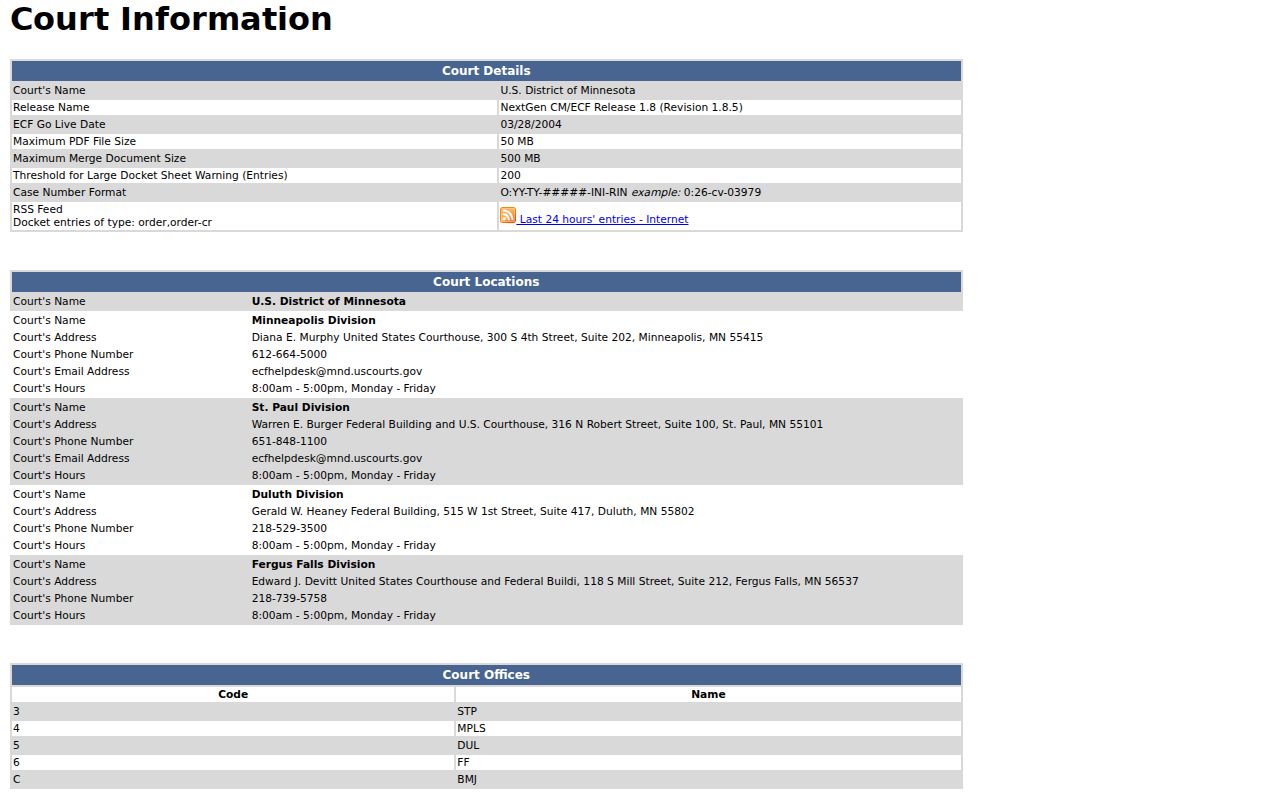
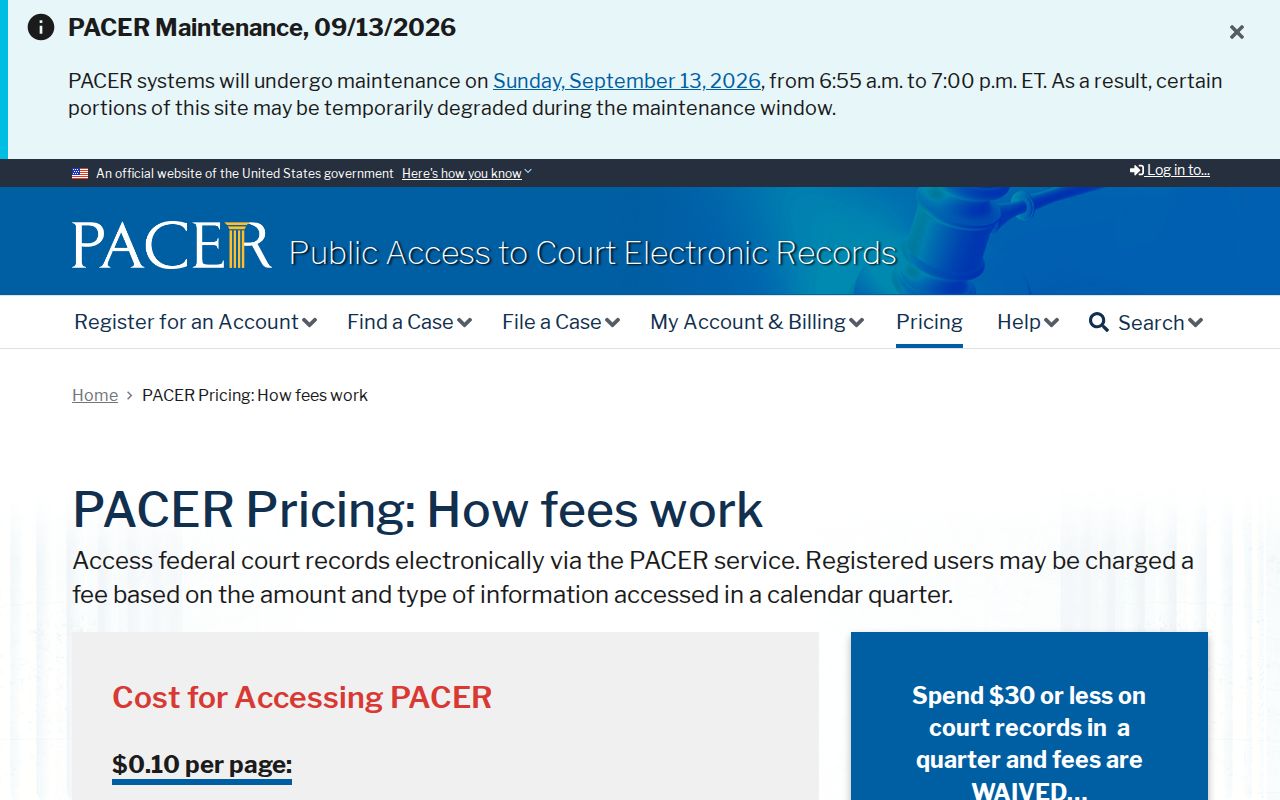
The number format matters. It is the only reliable way to tell a federal docket from a Mahnomen County file. For public access, PACER handles federal dockets, charging a per-page fee that is waived on small quarterly totals. PACER's fee rules lay out the cap and how the waiver works.
Federal arrest warrants can also be sealed, so a missing docket entry is not proof that no federal warrant exists alongside any Mahnomen County matter.
Handling an Arrest Warrant in Your Name
Believe an arrest warrant carries your name? Then order of steps beats speed in Mahnomen County. Confirm the file first, get advice, then act.
- Call Court Administration and ask whether a warrant exists and what category applies.
- Contact a licensed Minnesota attorney before arranging a surrender or a payment.
- Ask the court what it expects: a motion, a new appearance date, a payment, or a surrender.
- If surrender applies, confirm the building, the time, and the detention destination before traveling.
- Keep every receipt, order, and written confirmation, and recheck the status afterward.
Important: An open arrest warrant can lead to custody at any police contact, so do not wait on a plan. Talk with a lawyer first, and do not confront or approach anyone named in the case.
The same sequence, written for Mahnomen County as a whole, sits in the Mahnomen County warrant resolution steps.
Where Mahnomen County Federal Warrants Are Handled
Federal matters from this part of Minnesota route to the District of Minnesota. Its courthouses sit in Duluth, Fergus Falls, Minneapolis, and St. Paul. Duluth is the nearest of the four to Mahnomen County, though venue still depends on the individual case and the clerk's assignment. The U.S. Marshals Service covers this county for federal fugitive and execution work. That agency does not act as the state court clerk and cannot confirm a county warrant. So keep the two paths straight. The federal courthouse in Duluth is a regional contact point rather than a county office, and the federal clerk's central number handles case questions.
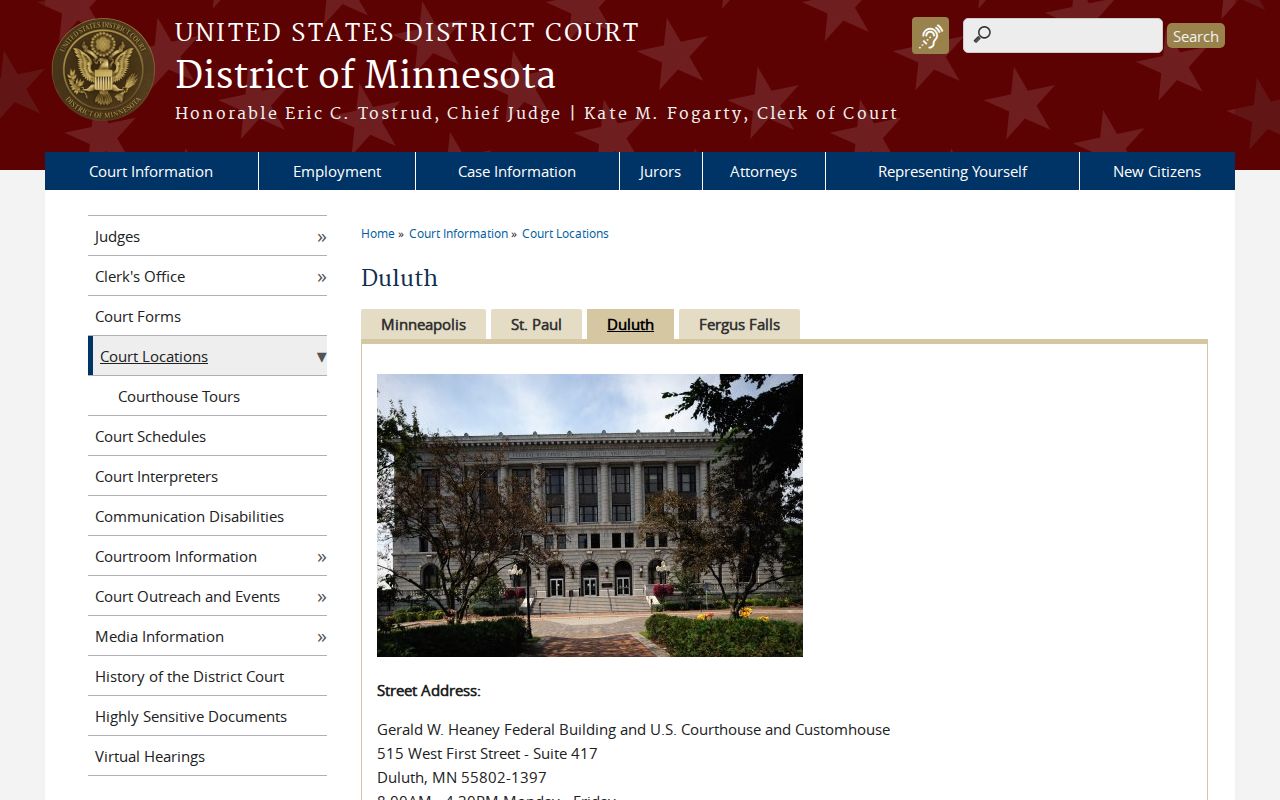
Keeping the state and federal paths apart is the whole point. A search in one system will never reveal the other, so a Mahnomen County warrant check is only half the picture.